
 Featured series
Campus & Community
-
What’s next after a Nobel? It’s a surprise.
Harvard scientist Gary Ruvkun awarded medicine prize for microRNA insights. ‘My ignorance is bliss,’ he says.
-
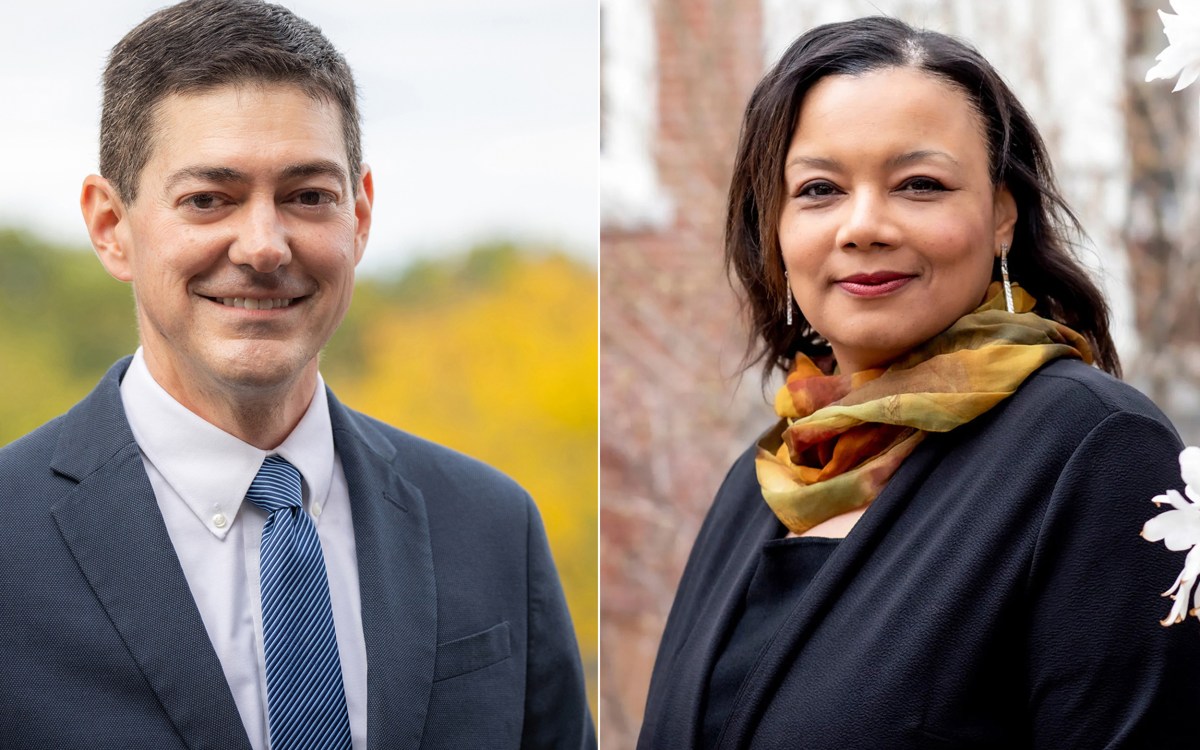
A blueprint for better conversations
After months of listening and learning, open inquiry co-chairs detail working group’s recommendations
-
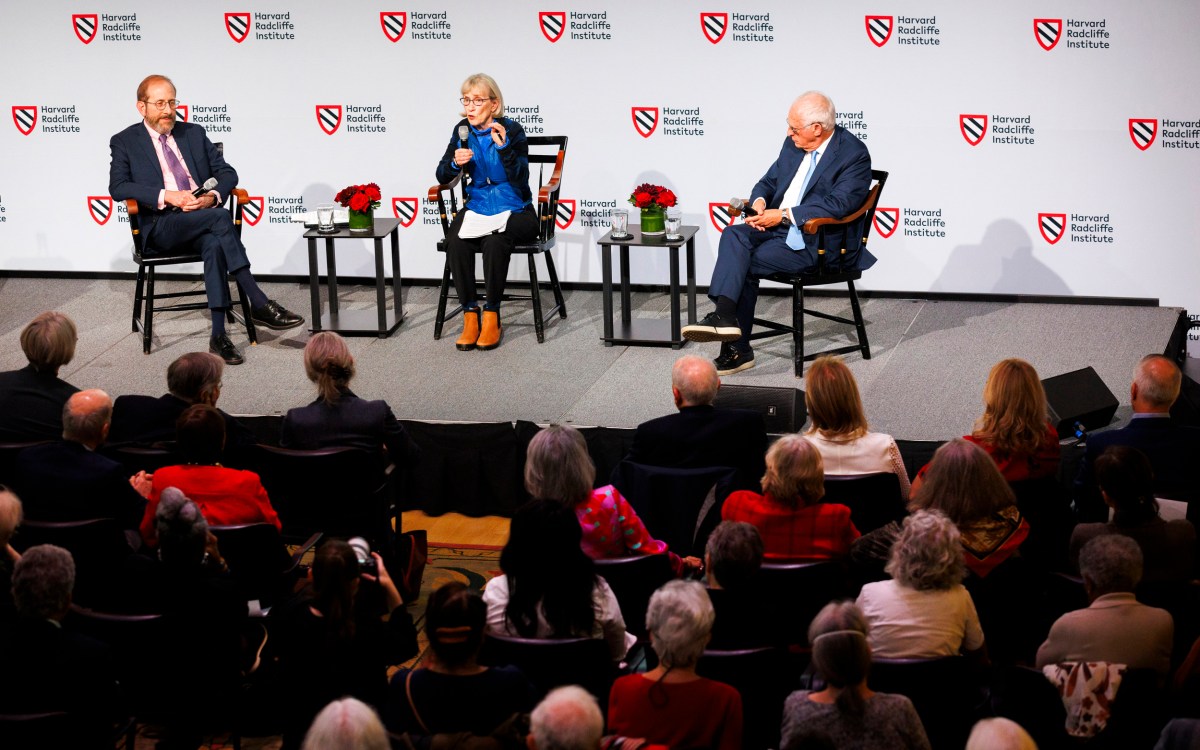
Celebrating 25th anniversary of Radcliffe Institute
Three Harvard presidents, two Nobel laureates gather to mark ‘unique legacy and remarkable impact’
-
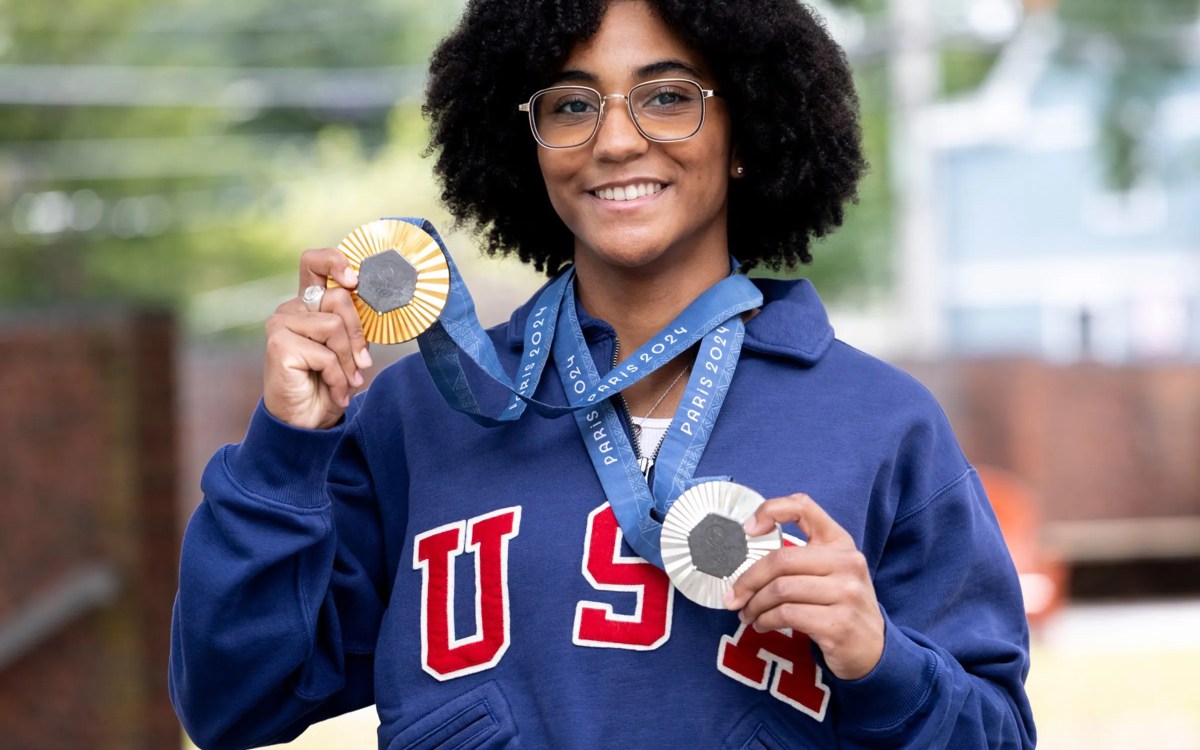
Scruggs describes ‘super surreal moment’ when she made Olympics history
Harvard fencer reflects on path to silver and gold — including facing a childhood idol — and what keeps her balanced, focused
-
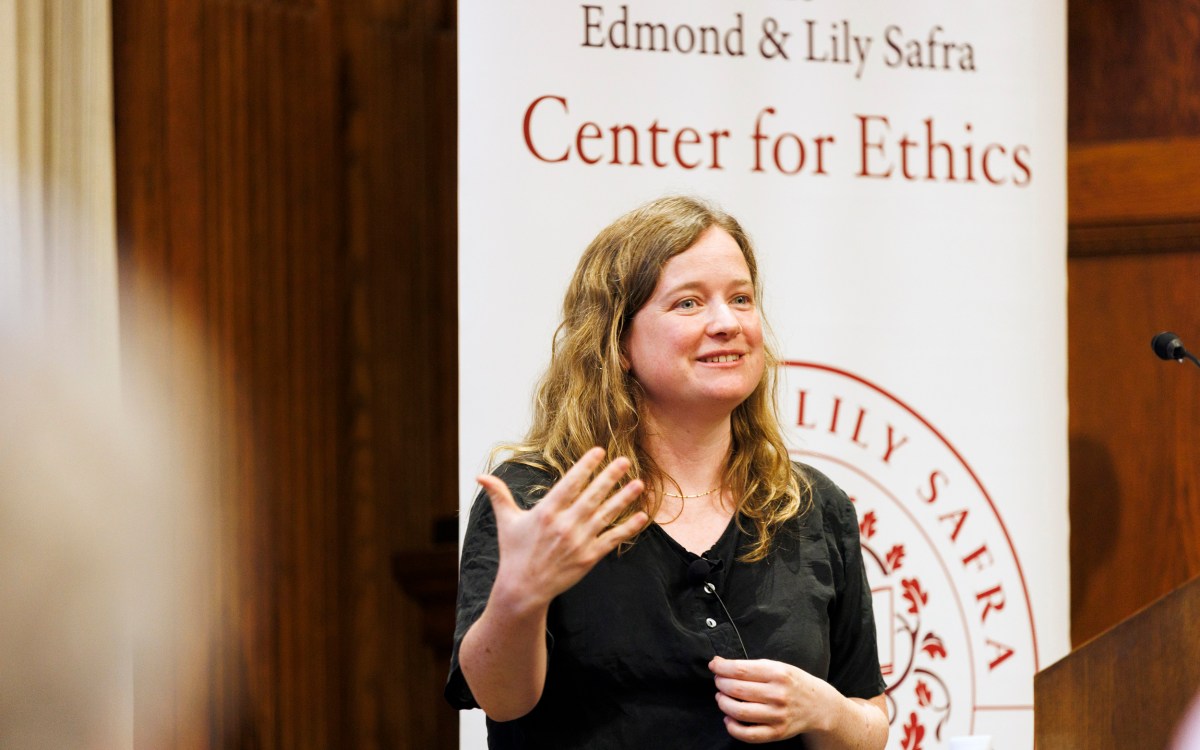
Why are you so offended?
It’s about status, not hurt feelings, philosopher argues
-
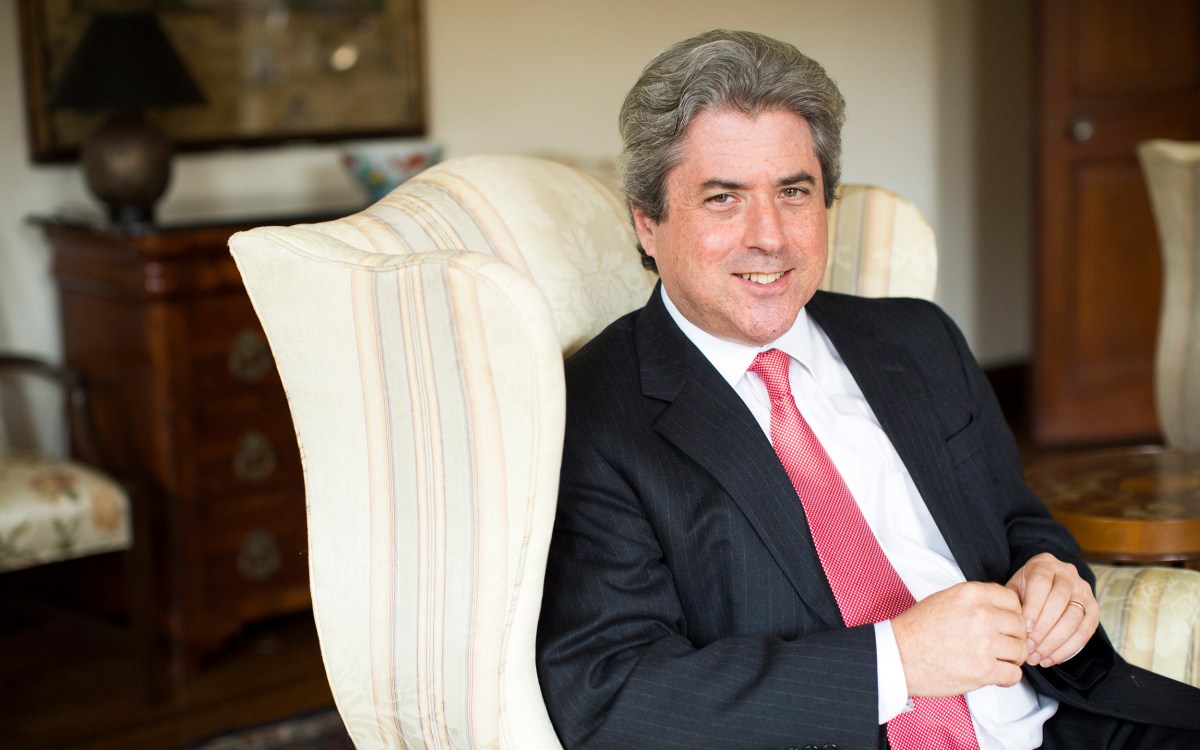
Goodheart to step down as University secretary in May
Will continue to advise Garber and other campus leaders
-
Pros and cons of Native gaming eyed:
Up until the 1980s, the San Manuel Band of Mission Indians of Highland, Calif., were dirt poor, with a 75 percent unemployment rate. The tiny tribe lived on a reservation of 740 acres in the San Bernardino hills, mostly in mud huts without electricity or running water.
-
Human rights committee seeks nominations for Scholars at Risk:
The University Committee on Human Rights Studies, with the support of President Lawrence H. Summers, has launched an initiative to assist scholars who face persecution in their home countries. Every year, the committee provides a Scholars at Risk fellowship for at least one persecuted scholar to come to Harvard for up to a year. The risk of persecution may be related to the scholars work, ethnicity, religion, or political opinions. Writers, public intellectuals, and scholars, from any discipline represented at Harvard are eligible, and will be hosted as visiting fellows in the appropriate academic department. An interdisciplinary faculty committee reviews nominations and selects the scholar.
-
Faculty of Arts and Sciences Standing Committees — 2002-2003
Upon the recommendation of the Dean of the Faculty of Arts and Sciences, the President approved and announced the following Standing Committees at the F.A.S. Faculty Meeting of Oct. 15, 2002. Standing Committees of the Faculty are constituted to perform a continuing function. Each committee has been established by a vote of the Faculty, and can be dissolved only by a vote of the Faculty or, with the agreement of a particular Committee, by the Dean and Faculty Council. The Dean recommends the membership of each committee annually.
-
Walkin’ wavy
Navigation around campus became more challenging when the snow started round about Dec. 5. Forecasters say its expected to let up before June.
-
Perilous time for Afghan women:
The hope for a better future and a break from strife that many Afghans felt with the toppling of the Taliban regime has been replaced with the reality that a difficult climb to that future lies ahead, a climb even more difficult for Afghanistans women.
-
Charter competition questioned:
A study by two Harvard Law School researchers provides evidence that the vigorous competition among states over corporate charters – competition that many believe prompts rules that benefit shareholders – is largely a myth. This evidence has led the researchers to call for federal law to provide a federal incorporation option, as well as to enable shareholders to initiate and vote to approve corporate reincorporation to a different jurisdiction. The study – by Professor Lucian Bebchuk and Olin Fellow Assaf Hamdani – will soon appear in the Yale Law Journal.
-
Testosterone drives away the blues:
Harrison Pope, a professor of psychiatry at Harvard Medical School, was looking for a few good men with severe depression and low levels of testosterone.
-
This month in Harvard history
Jan. 1, 1920 – The Harvard football team scores a 7-6 win over Oregon in the Crimson’s only appearance at the Rose Bowl in Pasadena, Calif. Jan. 12-13, 1921 –…
-
Police reports
Following are some of the incidents reported to the Harvard University Police Department (HUPD) through Jan. 3. The official log is located at 1033 Massachusetts Ave., sixth floor.
-
Newsmakers
AESC awards Bartlett Christopher A. Bartlett, Thomas D. Casserly Jr. Professor of Business Administration at Harvard Business School, and Professor Sumantra Ghoshal of London Business School have won the 2002…
-
Sleeping giants attack!:
Following a trio of nightmarish defeats to Boston College, Richmond, and the Virginia Military Institute, Harvards sleeping giants were more than a little stirred in the Crimsons league opener against Dartmouth (4-7, 0-1 Ivy) this past Saturday (Jan. 4), lifting the mens basketball team past the Big Green, 67-50.
-
Brian Sinclair dies at 62:
Brian Sinclair 62, a Harvard employee for three decades and co-host of the popular Hillbilly at Harvard radio program on WHRB since 1966, died Dec. 28 after battling leukemia. He was 62.
-
Fish twice a month reduces risk of stroke
Researchers from the School of Public Health studying the role of fish consumption and risk of stroke among men have found that men who eat fish as little as twice per month significantly reduce their risk for ischemic stroke compared with men who eat fish less often or not at all. The findings are in the Dec. 25, 2002, issue of the Journal of the American Medical Association.
-
Bust a study break:
For most of the 1,400 freshmen who joined President Lawrence H. Summers at the first-ever Reading Period Study Break in Annenberg Hall Monday night (Jan. 6), it was the food – sumptuous displays of decadent desserts and a veritable mountain of nachos – that lured them away from their books and papers.
-
Researchers debate origin of language:
If chickens could talk, would they have anything interesting to say? Most scholars think not. But Marc Hauser, a Harvard professor of psychology, disagrees with them.
-
Five Harvard students selected as 2003 Rhodes Scholars :
Thinking outside the box seems to have given Harvard students the edge in the Rhodes Scholarship competition this year. Four Harvard College students and one from the Medical School received the prestigious award – more than from any other school. All of them are pursuing academic careers that are interdisciplinary and unconventional.
-
‘Tis the season:
Lewie Remele 06 hangs holiday decorations inside his dorm room in Grays Hall.
-
This month in Harvard history
Dec. 3, 1948 – The 110-member Harvard University Band makes its second appearance at Symphony Hall, Boston. The program features well-known marches and traditional band music, along with works by…
-
A letter from President Summers:
Dear Colleagues, I am writing to bring to your attention a Harvard initiative concerning scholars who face persecution…
-
Gore family values:
At the Askwith Education Forum at the Graduate School of Education (GSE) Friday (Dec. 6), Al Gore introduced himself as the former next president of the United States and closed with a cautious endorsement of the electoral college system that kept him from that post in 2000.
-
Matthew Shair imitates, improves on nature:
Matthew Shair takes his inspiration from nature. The recently tenured professor of chemistry and chemical biology tries to solve natures mysteries and learn enough in the process to improve upon the mother of life. His work is called biomimetic synthesis, mimicking the way that life works by mixing chemicals in a laboratory.
-
Crimson stick it to ’em:
There were just enough moments of dazzle and dominance in this past Saturdays (Dec. 7) womens hockey match-up at the Bright Hockey Center that host Harvard appeared to be playing against an ice version of the Washington Generals – that hapless squad of fall guys made infamous by the Harlem Globetrotters. Though for the No. 1 nationally ranked Crimson, the 4-0 shutout against Northeastern (5-8-2) was no trickery.
-
Standing on line at the bubbler with a hoagie in my hand :
There are those who say America is losing its regional identity, that theres no more difference between Spokane and Spotsylvania, Klamath Falls and King of Prussia than there is between fast-food stops along the interstate. They say the mass media has homogenized our culture, making us all look the same, dress the same, act the same, and talk the same.
-
Mother of documentary theater brings her “children” to Loeb Drama Center:
Thirty years ago, when Emily Mann 74 was an undergraduate directing plays at the Loeb Drama Center, someone told her that as a woman, she couldnt possibly have a career as a playwright and theater director. Had she considered childrens theater?
-
Newsmakers
MVP Morris named top senior Harvard wide receiver Carl Morris ’03 – named the Ivy League’s most valuable player for the second consecutive season – received the Harry Agganis/Harold Zimman…
-
University will provide advance to ease January pay transition
Harvard employees currently paid on a semimonthly basis will find something extra in their first paychecks when they switch to biweekly pay in January – an advance equal to nine days pay without taxes or deductions.
-
In brief
HOLLIS unavailable on 27th The Harvard University Library (HUL) has announced that the HOLLIS Catalog will be unavailable from 4 a.m. until 9 p.m. on Friday (Dec. 27). HOLLIS will…
-
Stroke risk from obesity is now measurable
Researchers at Brigham and Womens Hospital (BWH) in Boston have determined that obesity is a measurable risk factor for stroke in men, and have calculated that risk in terms of the popular equation used to measure obesity, known as the Body Mass Index, or BMI.
-
Alumni are encouraged to support priorities across the University
Harvard has historically engaged alumni on a school-by-school basis. Those who graduate from one school have the opportunity to learn about its activities get to know its faculty, academic leaders, and fellow alumni and are encouraged to support its priorities. Alumni who graduated from the College, the Business School, and the Law School, in particular, have given generously to these schools over the years, and their support has been vital to the development of outstanding teaching and research programs at each school.
-
Modern megaliths
Outside the Science Center, at Harvards very own version of Stonehenge, snow-capped boulders make for a surreal landscape.